a reproducible toolchain manager for blockchain development
block is a reproducible toolchain manager for blockchain development. A
blockchain project’s build depends on binaries nobody declared: whichever
Foundry the last person installed, whichever solc was on that runner,
whichever relayer the integration test found. block makes that set explicit and
reproducible — declared in block.toml, pinned by checksum in block.lock,
and identical on every machine and every runner.
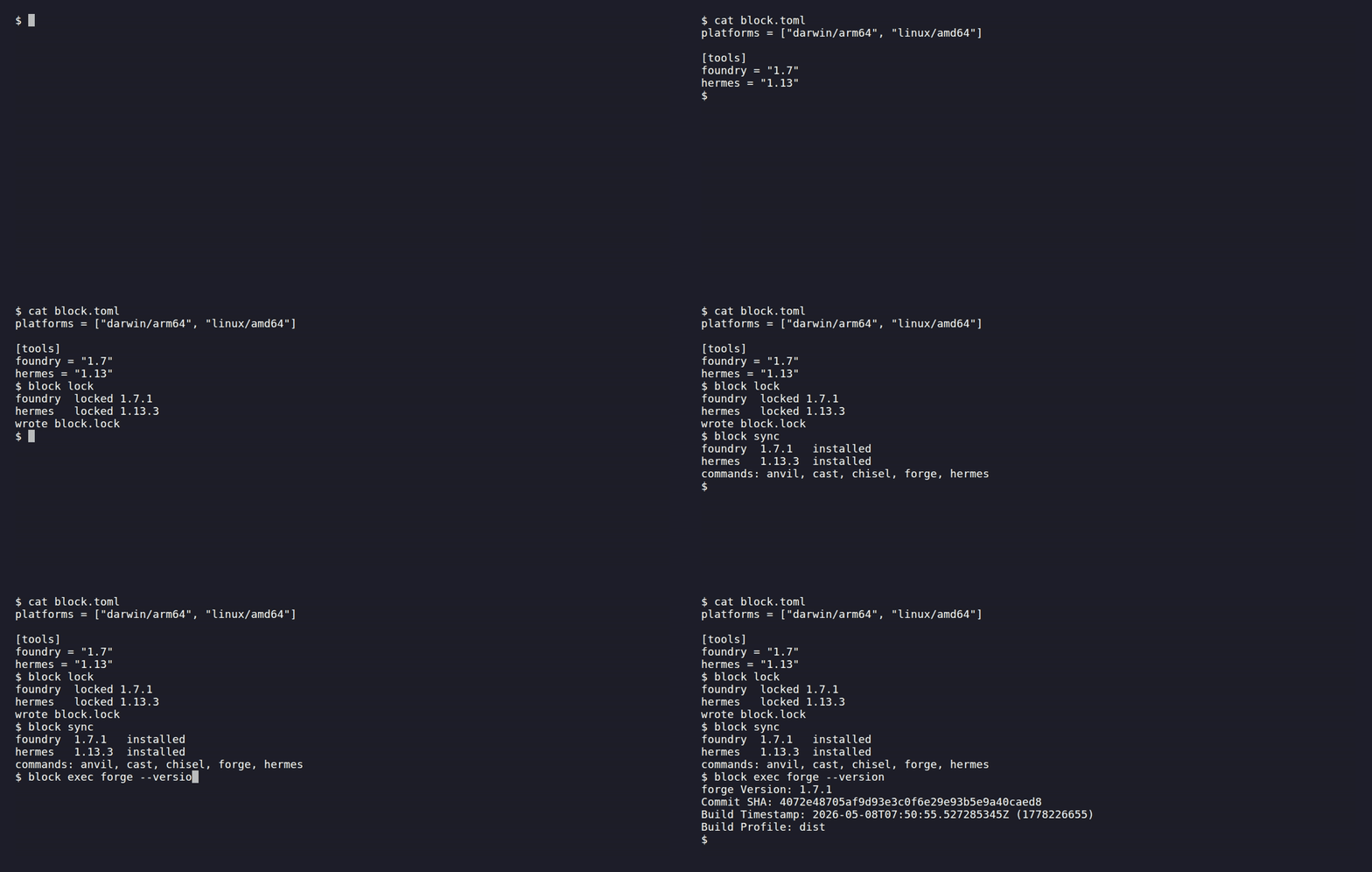
Try it in 30 seconds #
If you have Go, paste this into an empty directory:
printf '[tools]\nfoundry = "1.7"\n' > block.toml
go run github.com/nao1215/block@latest lock   # resolve: block.toml -> block.lock
go run github.com/nao1215/block@latest sync   # install what block.lock pins
go run github.com/nao1215/block@latest exec forge --version
foundry  locked 1.7.1
wrote block.lock
foundry  1.7.1  installed
commands: anvil, cast, chisel, forge
forge Version: 1.7.1-v1.7.1
sync is a step, not a formality: exec never installs anything, so it runs
what sync put on disk or it refuses.
Foundry publishes Linux and macOS builds only, and block says so rather than substituting something else. On Windows, the same 30 seconds with a tool that does ship there:
printf '[tools]\nsolc = "0.8"\n' > block.toml
go run github.com/nao1215/block@latest lock
go run github.com/nao1215/block@latest sync
go run github.com/nao1215/block@latest exec solc --version
What each CLI ships for is in Tools.
Two files now say what your toolchain is. Commit both, and everyone else runs
block sync.
Three lifecycle commands, one direction #
block.toml ──block lock──▶ block.lock ──block sync──▶ installed toolchain ──block exec──▶ command
block lock   resolves the toolchain.
block sync   installs the locked toolchain.
block exec   runs with the installed toolchain.
sync never resolves. exec never installs. lock is the only operation that
can move a pin — so a build cannot quietly pick up a release that happened
overnight, and a stale lockfile is an error rather than a guess.
What can it install? #
51 tools across 17 blockchain systems, from Bitcoin Core and Foundry to Agave,
Gaia, Hermes and Starknet Foundry. Ask the binary — offline, with no
block.toml and no token:
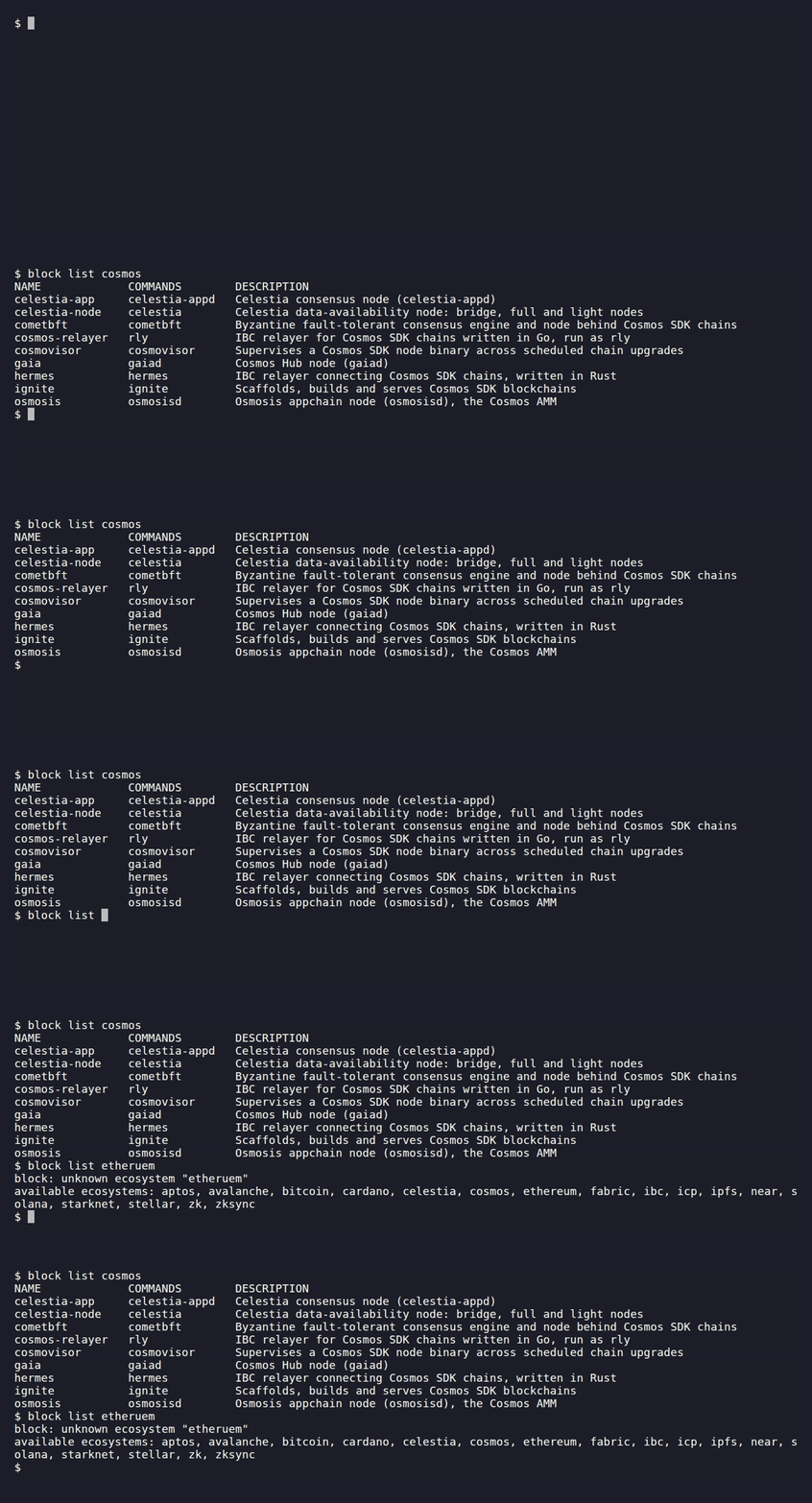
The whole catalogue, with commands and platform coverage: Tools. A
tool that is not there — or a fork of one that is — is four lines in your own
block.toml; nobody waits for a registry merge.
Why block? #
Pick the tool that fits the job:
| You want | Use |
|---|---|
| A pinned language runtime and a general-purpose tool manager | mise, aqua |
| A whole operating system reproduced, or isolation from untrusted code | Docker, Nix |
| The blockchain CLIs one repository builds and tests with, pinned by checksum and shared across projects | block |
block’s emphasis is narrow on purpose: blockchain CLIs, project-local, verified on download, with no scripts in the recipes and no way for adding a tool to add a way to run something. It manages no language runtimes, and it is not trying to become a package manager. See Compared to Docker for the overlap, and where a container is still the better answer.
One machine, one toolchain per project #
block sync writes one file per command into $BLOCK_HOME/shims. Put that
directory on PATH once, by hand, and the version follows the directory you
are standing in — no shell hook, no eval, no activation:
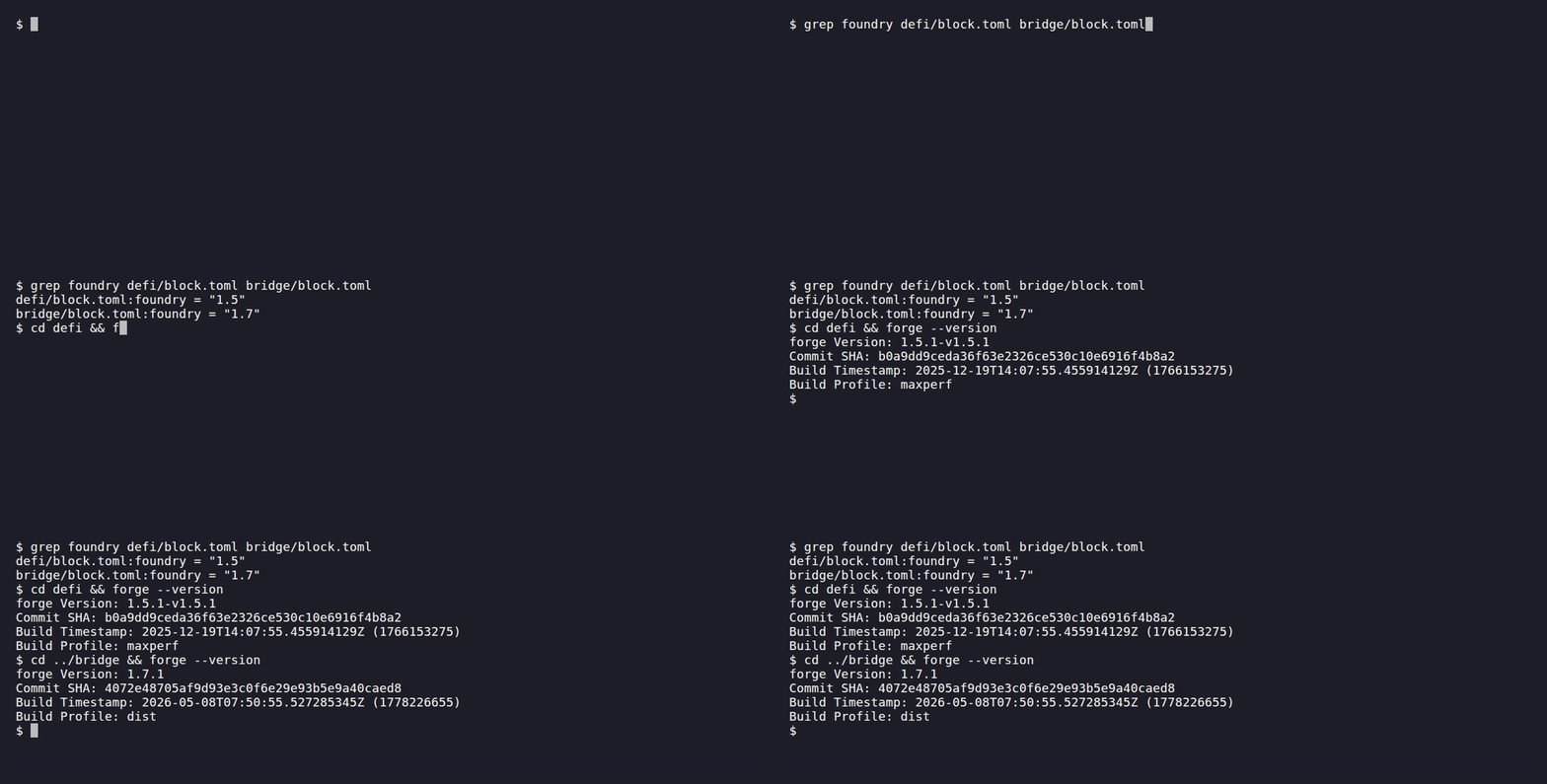
Outside a block project, or for a command the current project does not lock,
the shim steps aside and runs the next command of that name on PATH.
Next #
The cookbook has the rest: locking for a platform you are not on, caching the toolchain in CI, bringing your own tool, and reading a refusal. Reference is the file formats and the machinery underneath them.
To start from something rather than a blank file,
examples/ holds a
block.toml for each of eight kinds of repository — EVM contracts, an Ethereum
node pair, a Cosmos appchain, a Solana program, Bitcoin, Starknet, a
multi-chain tree, and one that brings its own tool.
Install #
go install github.com/nao1215/block@latest
Homebrew, prebuilt packages and release archives are on the install page.