
black-box E2E testing for CLIs, from plain YAML
atago tests real CLI behavior from plain YAML: commands, files, snapshots, services, and interactive terminals. It runs your actual binary — in any language — and asserts what a user observes. No test code, no shell DSL.
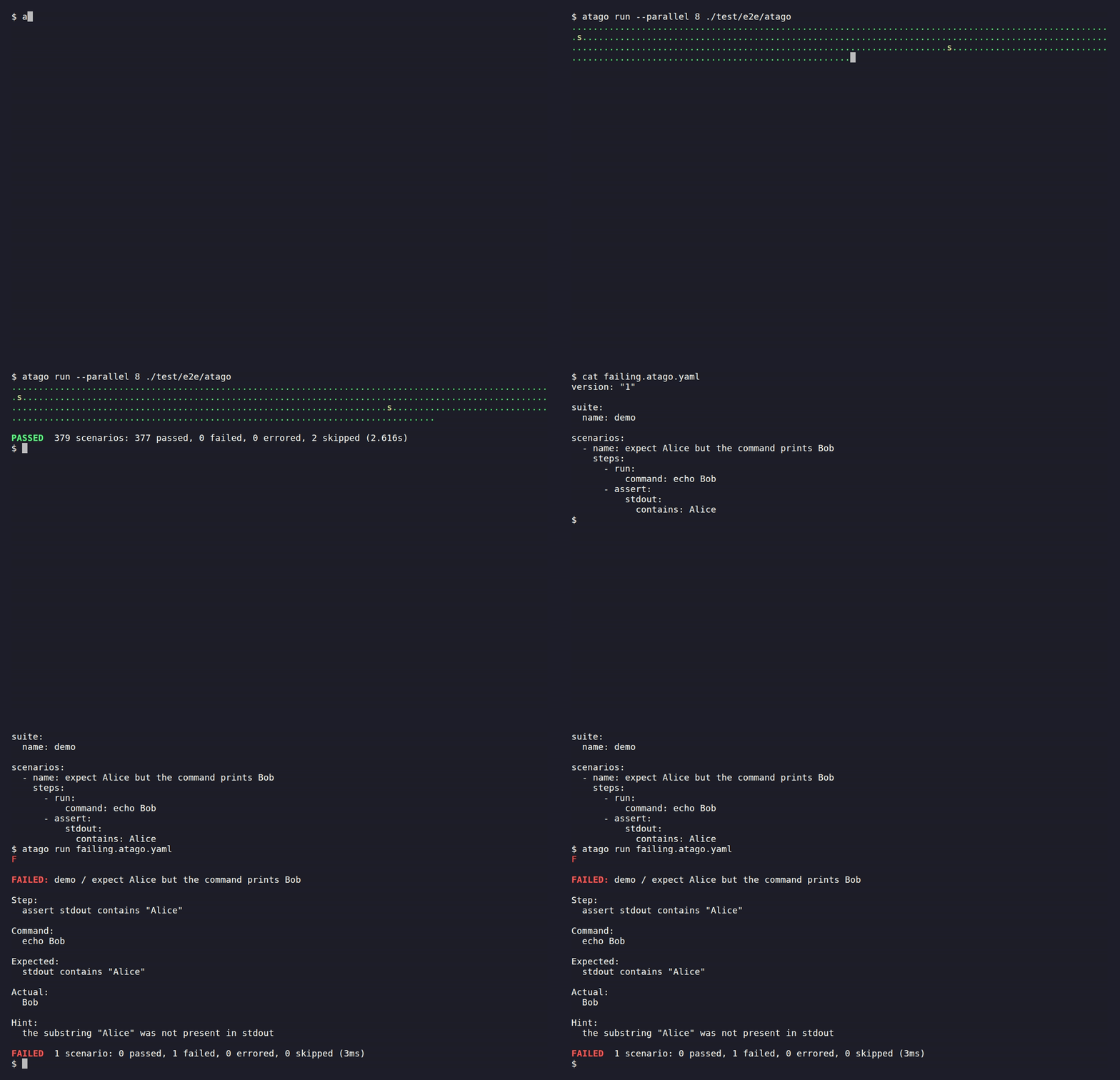
First run #
No install, no fictional binary — if you have Go, paste this. It records a real run of a command you already have, then replays it as a test:
go run github.com/nao1215/atago@latest record --out demo.atago.yaml -- git --version
go run github.com/nao1215/atago@latest run demo.atago.yaml
.

PASSED  1 scenario: 1 passed, 0 failed, 0 errored, 0 skipped (4ms)
record runs git --version once and writes a spec from what it observed — the exit code, the version line on stdout, an empty stderr. run replays it. Open demo.atago.yaml and you have a real test you can tighten, not YAML you wrote from scratch. (Swap git --version for any command you have: go version, jq --version, ls -la.)
Then point it at your own tool:
atago record --out mytool.atago.yaml -- mytool convert input.txt  # turn a real run into a spec
atago run mytool.atago.yaml                                       # replay it as a test
atago run --report junit specs/                                   # or run a whole suite in CI
Why atago? #
Pick the tool that owns your layer:
| You are testing | Use |
|---|---|
| An HTTP/gRPC API server — scenario-based API testing | runn |
| A whole platform — integration suites across HTTP, gRPC, Kafka, databases, and more | venom |
| Shell functions and scripts — BDD-style unit tests | ShellSpec |
| Bash scripts — TAP-style tests | Bats |
| A CLI product — exit codes, output, generated files, snapshots, interactive prompts and TUIs | atago |
If the server or the platform is the system under test, use runn or venom. atago points the other way: the CLI is the product, and HTTP, database, SSH, gRPC, browser, and mock servers appear only as peers your CLI talks to.
A feature-by-feature comparison states the versions compared and its sources, and the migration guide maps Bats and ShellSpec constructs to atago one-to-one — every mapping runs in CI, originals and migrations both.
Record, don't write #
The first spec comes from a real run: atago record -- <command> executes the tool once and writes a spec from what it observed — exit code, output, created files. Interactive tools record too: record --pty runs in a real terminal, you drive one session by hand, and the keystrokes become a replayable expect/send script, with password prompts masked into ${env:...} placeholders automatically. Then you edit YAML, not write it from scratch.
A known bug can live in CI #
expect_fail: marks a scenario that documents a bug you have not fixed yet. It keeps running on every commit — so the reproduction cannot rot the way a second, CI-excluded directory of "known bug" specs does — and an expected failure keeps the run green. The day it starts passing, the run turns red: the fix landed, and the spec has to be promoted into the suite that guards against a regression. An execution error stays an error, so a spec that stops running at all is never mistaken for a bug that is still there.
Or let atago pick the inputs #
forall: states the SHAPE of an input instead of listing values, and expands into one scenario per generated row — property-based testing in a spec file, one line to opt in:
forall:
  vars: {text: {type: ascii, min: 0, max: 40}}
The generators are seeded from the spec itself, never from the clock, so this stays a spec rather than a lottery: the same file tests the same inputs on every machine, atago list shows them before anything runs, and a failing instance carries its input in its name. Boundary values come first — the empty argument, the longest one, both booleans, every one_of choice — because that is where a CLI breaks.
Snapshots built for CLI output #
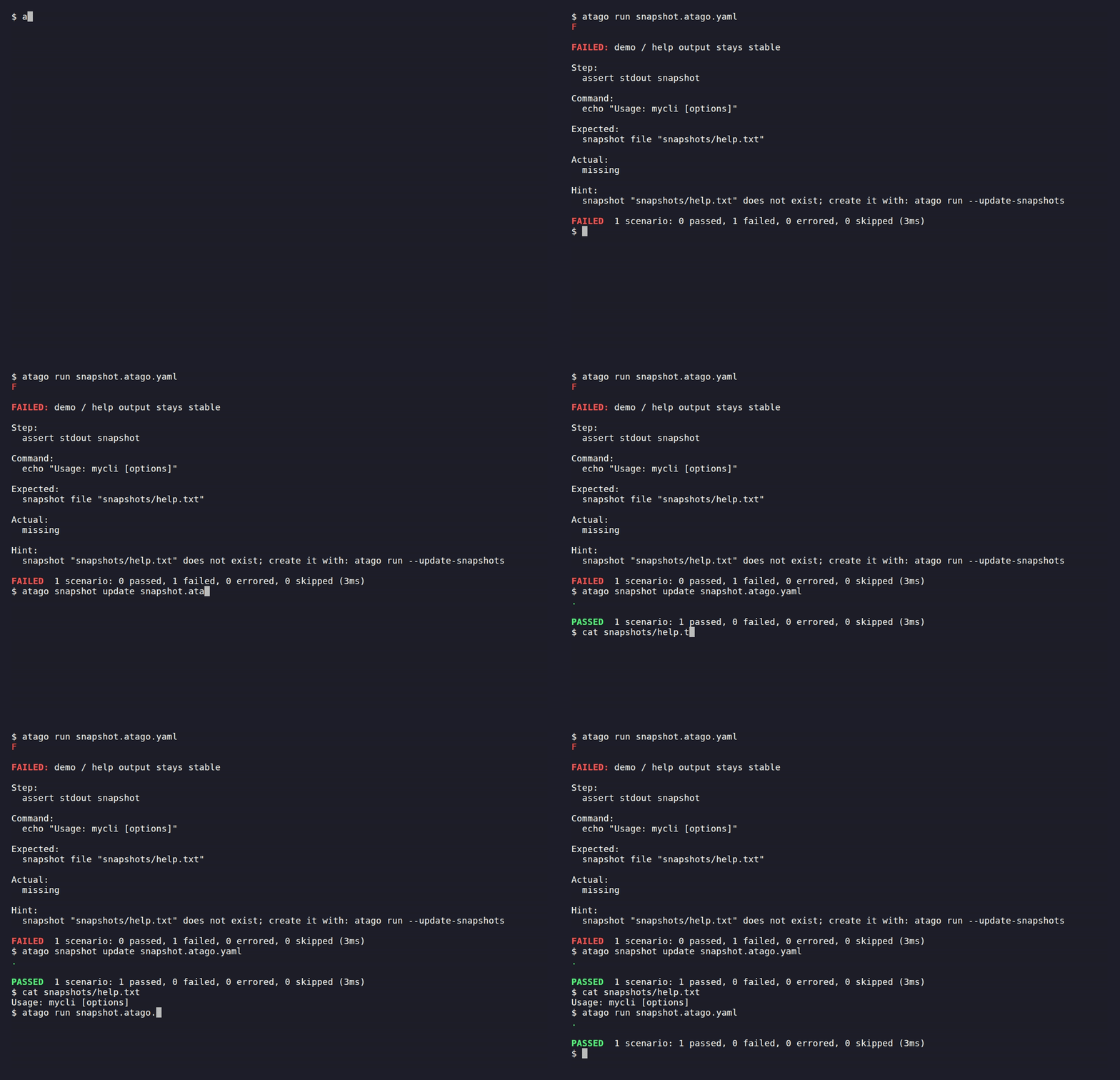
snapshot: pins output to a committed golden file. ANSI colors, temp paths, UUIDs, timestamps, ports, and CRLF are normalized so goldens stay stable across machines; your own volatile patterns get spec-wide scrub: rules. A failure renders a colorized unified diff, and atago snapshot update re-records everything intentionally changed — the review is just git diff snapshots/.
Real terminals, not faked pipes #
A pty: step runs the command in a real pseudo-terminal — on Windows too (ConPTY) — and drives it with declarative expect/send pairs and named keys, no expect(1) scripting. That includes control-byte aliases such as ctrl-space, ctrl-[, and ctrl-_, plus modified key events like ctrl-hyphen for TUIs that distinguish the physical Ctrl+- key. expect_screen: waits on the LIVE rendered frame while the program is still running; screen: asserts the final rendered frame after cursor movement and clears are applied, and screen snapshots pin full TUI layouts. TTY-detection branches, wizards, REPLs, htop-style dashboards: all of it is spec-able.
The name #
atago (愛宕) is named for Mount Atago in Kyoto, whose shrine enshrines a deity of fire prevention. The software industry has its own word for a project on fire — 炎上, "going up in flames" — and the name carries a wish: that atago grows into the thing that stops those fires before they spread. It also helps that atago is written in Go, so the name ends in go.
Where to go #
- Install —
go install, Homebrew, AUR, aqua, mise, prebuilt binaries, a GitHub Action. - Getting started — record a real run, read the spec it wrote, keep it as a test.
- Cookbook — 50+ copyable recipes indexed by task, plus the runnable, CI-tested example for every feature.
- Use it in CI — report formats, retries, flake detection, artifacts, secret masking.
- Reference — subcommands, exit codes, and every spec key with the release that introduced it.
- Real CLIs tested with atago — 40+ programs from jq to terraform to yazi that atago tests on its own initiative, each with executable specs and generated behavior docs.
Everything on this site comes from files committed in the repository. The behavior docs are regenerated from executable specs, and drift tests fail the build when docs and specs disagree — if an example is on this site, it runs.